What are the Sustainable Development Goals?
Ceren Türker
Author
What are the Sustainable Development Goals?
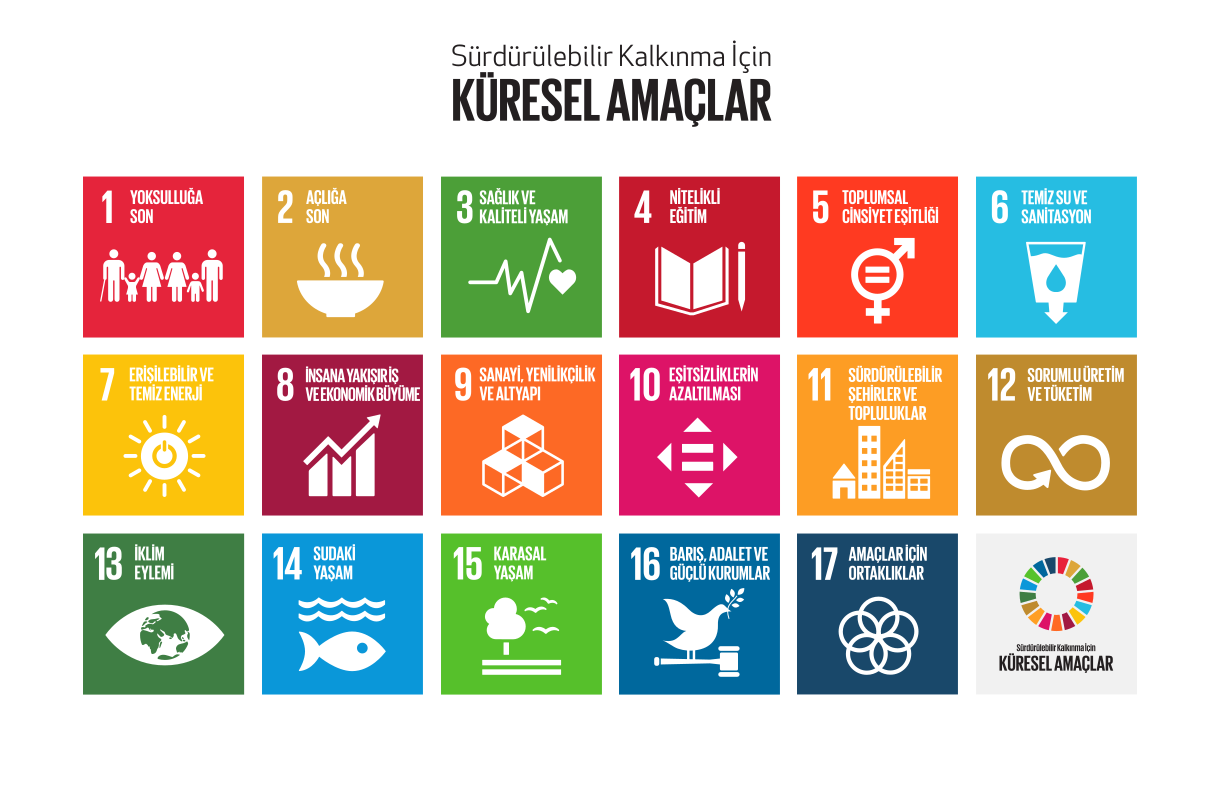
Today’s world must pursue economic growth while also addressing environmental and social challenges. Is there a way to make both today and tomorrow more liveable? At this point, the Sustainable Development Goals (SDGs) adopted by the United Nations aim to increase prosperity globally and leave a more liveable world to future generations. These goals, adopted in 2015, consist of 17 main themes to be achieved by 2030.
The 17 Sustainable Development Goals
- No poverty: End poverty in all its forms.
- Zero hunger: Ensure access to adequate nutrition for everyone.
- Good health and well-being: Healthy lives for all age groups.
- Quality education: Inclusive and equitable education for all.
- Gender equality: Equality between women and men.
- Clean water and sanitation: Ensure access to clean water for everyone.
- Affordable and clean energy: Expand sustainable energy sources.
- Decent work and economic growth: Sustainable economic development.
- Industry, innovation and infrastructure: Build innovative infrastructure.
- Reduced inequalities: Reduce social and economic inequality.
- Sustainable cities and communities: Liveable, inclusive, resilient cities.
- Responsible consumption and production: Use resources more efficiently.
- Climate action: Urgent measures against climate change.
- Life below water: Protect oceans and marine ecosystems.
- Life on land: Sustainable use of terrestrial ecosystems.
- Peace, justice and strong institutions: Develop justice systems and make them accessible to all.
- Partnerships for the goals: Strengthen global cooperation and partnerships.
Why do the SDGs matter?
The Sustainable Development Goals are not only a plan to protect the environment—they are a broad strategy to reduce economic and social imbalances. Through the SDGs, global poverty can be tackled, inequalities reduced, a more liveable environment created, and economic development made more balanced.
The SDGs require contributions from all countries, companies, and individuals—but they are not only governments’ responsibility. As individuals we can contribute through everyday choices: reducing waste, using water consciously, preferring local and sustainable products, and more.
Learn more about the SDGs and take action with us to shape the future together.